A robocall lawsuit needs a named company to sue. If you don’t know who is calling, answer the next call, listen to the pitch, and ask for the company’s legal name, website, email, and a callback number. Log every call with the date, time, and number. Once you have a name or a solid log, resubmit your case for review.
Why You Need a Company Name to File a Robocall Lawsuit
If you landed here after our case review form, you told us you don’t yet know who is calling you, and you don’t have a list of the numbers. That is common, and it is fixable.
A TCPA lawsuit is filed against a person or company. Without a defendant, there is no one to serve and no one to pay. Robocallers know this, which is why many of them work hard to stay anonymous.
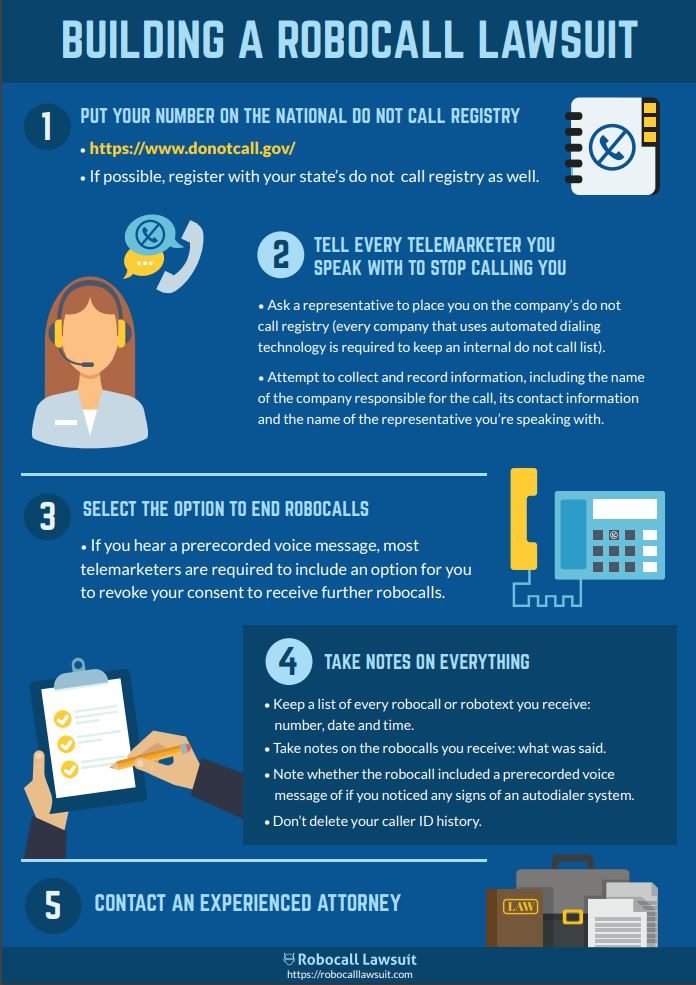
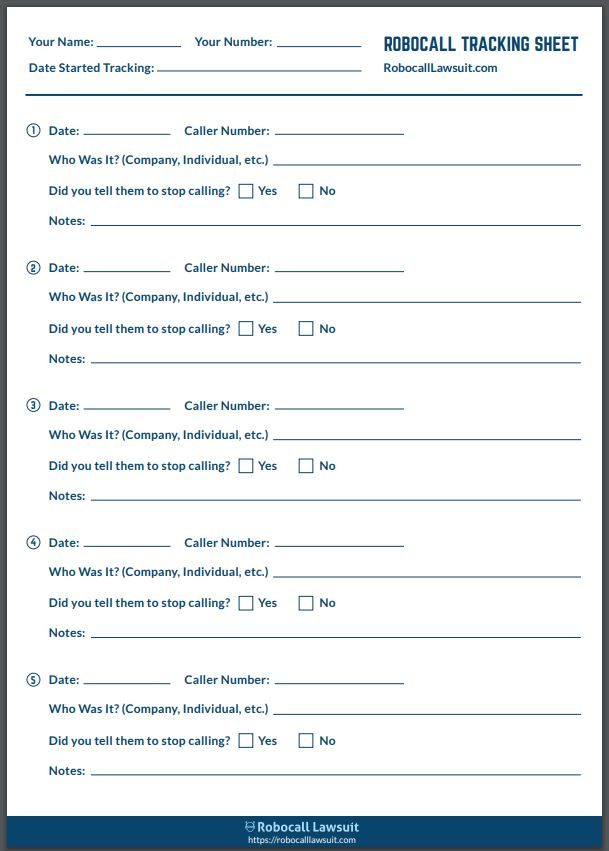
Five steps to building a robocall case. Select the image to view it full size.Download the printable robocall tracking sheet (PDF).
How to Get a Robocaller’s Company Name on the Next Call
Answer the next call that fits the pattern you recognize. Stay calm and act mildly interested. You are gathering facts, not agreeing to anything. These questions work because they sound like normal customer questions:
“What’s your website? I want to look at the details before I decide.” A real website is the fastest way to identify a company.
“Can you email me that so I can go over it with my spouse?” An email carries a domain name and often a company signature.
“What’s a good callback number for you?” Write it down. It may not match your caller ID.
“What’s the company’s full legal name? I like to check a business before I give out any information.” Ask for the name on their contracts, not just a brand name.
“Where are you located?” A city or state helps trace the business.
“Who am I speaking with?” Note the agent’s name and the name of anyone you are transferred to. Transfers often reveal the real seller.
If the caller refuses to name the company or hangs up when you ask, write that down too. Evasion is a pattern that matters later. Our guide to identifying an unknown caller covers reverse lookups, carrier spam labels, and the questions to ask on the next call.
Free Printable Robocall Call Log
Use this log for every call and text from now on. Fill in what you can. Blank boxes are fine, but made-up details are not.
Robocall and Spam Text Log
Your name: ________________________ Your phone number that was called: ____________________ On Do Not Call Registry since: __________
Date
Time
Number on caller ID
Call, text, or voicemail
Recorded voice or live person?
Company name they gave
What they were selling or collecting
Did you say stop?
Screenshot saved?
Tip: ask every caller for the company's legal name, website, and a callback number. Screenshot each call and text. Keep this log until your case is reviewed. RobocallLawsuit.com · (917) 551-6690
A log kept at the time is stronger evidence than a list pieced together months later. Keep it with your screenshots. For what else to save, see our guide to what evidence wins a robocall case.
Five steps to stop the calls and build a case
Register on the National Do Not Call Registry. It’s free at donotcall.gov or by calling 1-888-382-1222 from the phone you want to register. The FTC says it can take about a month for sales calls to stop, and your registration doesn’t expire. After that, repeated sales calls from the same company can start to count under the Do Not Call rules.
Log every call and text. Record the date, time, number, what was said, and whether it was a live person or a recording. Take screenshots of your recent calls list regularly, because many phones keep only a limited history.
Identify the company. Use the questions above. One good call with a website or email can turn a pile of anonymous numbers into a case.
Tell them to stop once, and note it. Say “Do not call this number again” on a live call, or reply STOP to a text. Write down the date and how you said it. FCC rules require callers to honor a stop request made in any reasonable way within a short period. Calls that keep coming after that carry more weight.
Report the calls and keep your own copy. File a complaint with the FTC or FCC if you want regulators to see the pattern. Reporting doesn’t start a lawsuit, but it does create a dated record. Our page on where to report robocalls has the official links.
What “Spam Risk” and “Scam Likely” Caller ID Labels Mean
Those labels come from your carrier or phone, not from the caller. They mean the carrier’s software flagged the number. They don’t tell you who is behind it. Log the call anyway. Our guides to caller ID spam labels explain what each one means.
When to Resubmit Your Robocall Case Review
Resubmit your case review when you have any one of these:
A company name, website, or email address tied to the calls.
A list of the numbers calling you, with at least a few logged calls from each.
A voicemail or text that names the business.
Several logged calls after you registered on the Do Not Call list or told the caller to stop.
You don’t need all of them. One solid lead on the company plus a log is often enough for a real review. Legal deadlines do apply to these claims, so don’t put it off for long. Logging for a few weeks is fine, but resubmit as soon as you have something useful.
Robocall Lawsuit FAQs
Can I sue a robocaller if I don’t know the company name?
Not yet. A lawsuit needs a named defendant. Use the next call to get the company’s legal name, website, email, or callback number, and keep a log. In some cases a lawyer can trace a company through the phone numbers, but having a name makes the case far easier to bring.
Is it legal to ask a telemarketer for their company information?
Yes. FCC rules require telemarketers calling your home to give their name, the name of the company they are calling for, and a phone number or address for that company. Asking for it is normal.
Should I press 1 to talk to someone?
Pressing a key to reach a live agent may be the only way to learn who is behind a recorded call. Keep in mind that it can also confirm your number is active, which may bring more calls. If you do connect, don’t agree to any offer and don’t share personal or payment information.
What if they stop calling once I start logging?
Keep everything you have. Older calls can still count toward a claim, and if the company starts calling again, those calls add to the same log. Since deadlines do apply, reach out sooner rather than later.