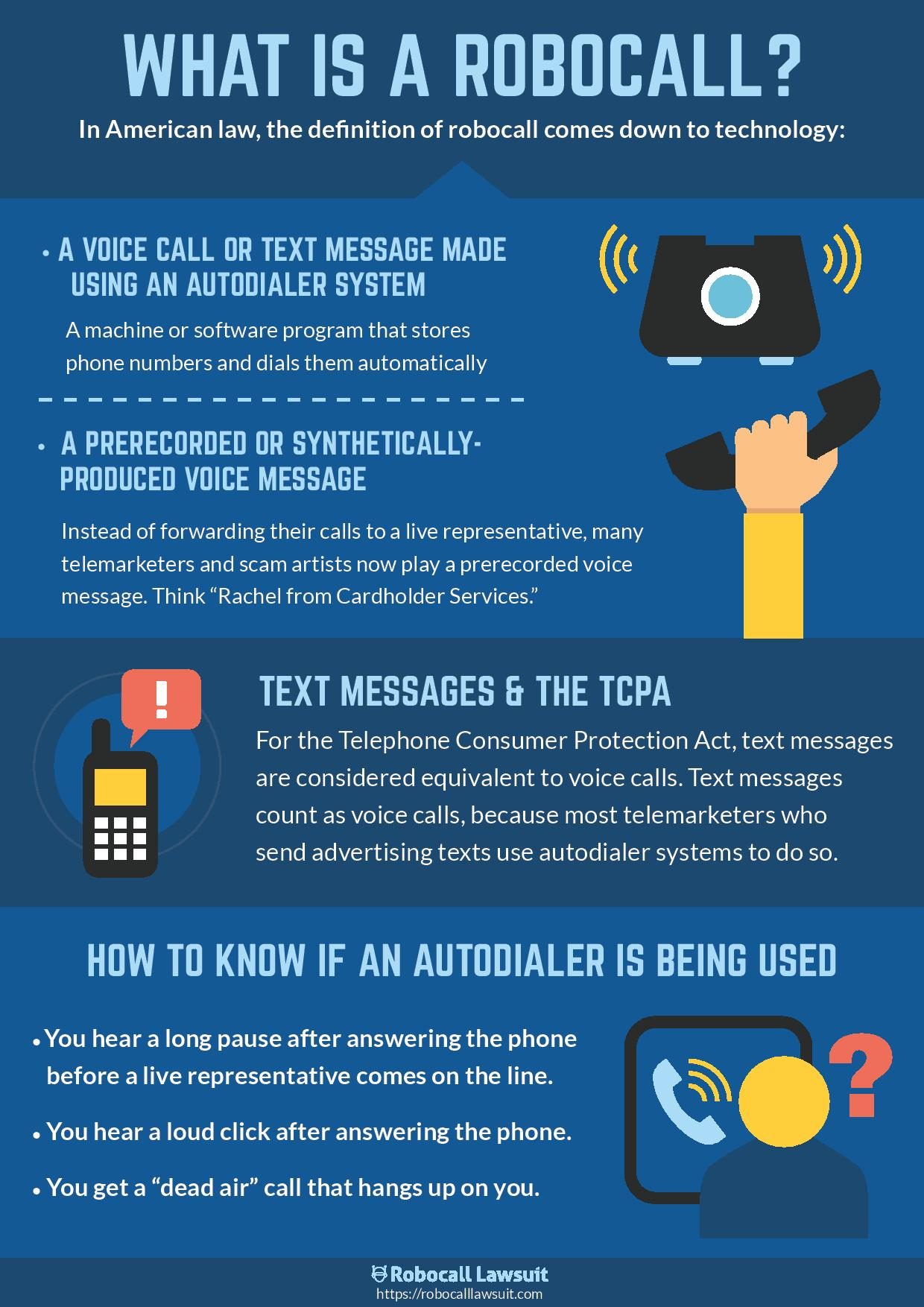
Under the TCPA, an autodialer is equipment that can store or produce phone numbers using a random or sequential number generator and dial them. In Facebook v. Duguid (2021), the Supreme Court held that systems that only dial numbers from a stored list do not qualify. Prerecorded-voice and Do Not Call claims do not require an autodialer.
The statutory definition
The TCPA defines an “automatic telephone dialing system,” often shortened to ATDS or autodialer, in 47 U.S.C. 227(a)(1): equipment “which has the capacity (A) to store or produce telephone numbers to be called, using a random or sequential number generator; and (B) to dial such numbers.” The FCC’s rule repeats the same definition at 47 CFR 64.1200(f)(2).
The definition matters because the TCPA’s best-known ban depends on it. Section 227(b)(1)(A) prohibits calls to cell phones “using any automatic telephone dialing system or an artificial or prerecorded voice” without prior express consent. If a live person placed the call from a system that is not an ATDS, and no recording played, that ban does not apply.
What Facebook v. Duguid decided
For years, courts split over whether the phrase “using a random or sequential number generator” modified both “store” and “produce,” or only “produce.” Under the broad reading, any system that stored a list of numbers and dialed them automatically counted.
The Supreme Court settled it on April 1, 2021. In Facebook, Inc. v. Duguid, Justice Sotomayor wrote for the Court:
“To qualify as an ‘automatic telephone dialing system’ under the TCPA, a device must have the capacity either to store a telephone number using a random or sequential number generator, or to produce a telephone number using a random or sequential number generator.”
The facts show how narrow the definition now is. Noah Duguid “never had a Facebook account and never gave Facebook his phone number,” yet he received login-notification texts from Facebook. Facebook’s system sent those alerts to numbers stored with accounts. It did not generate numbers randomly or sequentially, so it was not an autodialer, even though the texts went to a stranger. The Court said policy arguments about the TCPA’s purpose “cannot overcome the clear commands” of the statute’s text.
A footnote (footnote 7) kept one door open. It described a device that uses a random number generator to decide the order in which to pick numbers from a preexisting list, then stores those numbers to be dialed later. That kind of system could fall within the definition. Lower courts have been working out how far that footnote reaches ever since.
What is probably not an autodialer after Duguid
- A dialer that calls a customer list uploaded from a spreadsheet, in the order the list is sorted.
- A texting platform that sends a message to everyone who signed up on a website.
- A “click to dial” system where an agent clicks each number.
- A predictive dialer that pulls numbers from a stored list of leads, unless the plaintiff can show the random or sequential number generator feature.
A company that only calls numbers from its own records is usually outside the ATDS definition after Duguid, however many calls it places.
What still might be
- Systems that generate the numbers they dial randomly or sequentially.
- Systems that use a random or sequential number generator to store numbers for later dialing, the footnote 7 scenario.
- Campaigns where the caller clearly did not have your number from any relationship with you. That fact alone does not prove an ATDS, and Duguid itself involved texts to a stranger. But combined with other facts, it can support an argument that the numbers were generated rather than pulled from a customer list, and a basis to ask for records about the equipment.
Claims that do not need an autodialer at all
This is the part most people miss. Duguid narrowed one piece of the TCPA. It did not touch the rest.
| Claim | Needs an ATDS? | Cite |
|---|---|---|
| Prerecorded or artificial voice call to a cell phone without consent | No | 227(b)(1)(A) |
| Prerecorded or artificial voice call to a home line without consent | No | 227(b)(1)(B) |
| AI-generated or cloned voice call | No. The FCC treats AI voices as “artificial.” | FCC 24-17 (2024) |
| Sales calls to a number on the Do Not Call Registry (2+ in 12 months) | No | 227(c)(5); 64.1200(c)(2) |
| Sales calls after you asked the company to stop | No | 227(c)(5); 64.1200(d) |
| Sales calls before 8 a.m. or after 9 p.m. | No | 64.1200(c)(1) |
| Junk faxes | No | 227(b)(1)(C) |
If the call played a recording or an AI voice at any point, you do not have to prove anything about the dialer. The FCC’s 2020 “soundboard” ruling, which it reaffirmed in its 2024 AI ruling, says a live agent choosing which prerecorded clips to play “does not negate the clear statutory prohibition against initiating a call using a prerecorded or artificial voice.” See our prerecorded and AI voice call page.
Where the autodialer ban applies, and where it does not
The statute does not ban autodialed calls everywhere. Section 227(b)(1)(A) bars non-emergency autodialed calls without consent to emergency lines, hospital and nursing home patient rooms, and cell phones and other numbers where the called party pays for the call. The separate ban for home landlines in 227(b)(1)(B) covers only artificial or prerecorded voice calls. An autodialed call to a residential landline with a live agent on the other end is not barred by 227(b) at all. For landlines, the Do Not Call rules and the prerecorded-voice rule do most of the work.
One more autodialer rule protects businesses. It is unlawful “to use an automatic telephone dialing system in such a way that two or more telephone lines of a multi-line business are engaged simultaneously” (227(b)(1)(D); 64.1200(a)(5)).
The definition also turns on “capacity.” The statute asks what the equipment “has the capacity” to do, and Duguid framed its holding the same way: a device “must have the capacity” to store or produce numbers using a random or sequential number generator. How much weight that word carries, for example with software that could be configured to generate numbers but was not used that way, is one of the questions lower courts continue to sort out.
Autodialed texts
The ATDS question comes up often with marketing texts. Section 227(b) applies to texts only if they were sent with an autodialer (texts have no “voice”). Mass texting platforms often send to stored lists, and senders cite Duguid to argue they are not autodialers. Text claims that do not depend on the dialer, such as continuing to text after a STOP reply or texting a Registry number, run into a separate problem in the Seventh Circuit after its July 2026 Steidinger ruling. Our text message rules page covers both.
State autodialer laws can be broader
The federal ATDS definition is not the last word. Duguid interpreted only the federal statute. State telemarketing laws use their own wording, and a state court reads that wording on its own terms. Florida’s Telephone Solicitation Act, for example, gives a private right of action with $500 minimum damages per violation, trebled if willful or knowing (Fla. Stat. 501.059(10)). Whether a particular dialer is covered depends on the state’s own wording. Check our state autodialer law pages for your state’s rules before assuming a federal dismissal ends the case.
How to tell what kind of system called you
You usually cannot know the equipment from your end. Some signs help build the record:
- A pause or click before anyone speaks, or a dead line when you answer.
- A recording, or a voice that sounds synthetic or does not respond naturally to questions.
- Calls to a number you never gave to anyone, or to a brand-new number.
- Many calls from different numbers selling the same thing.
- Texts that address you by the wrong name, or by no name.
Write these details down after each call. Our evidence call log has fields for them.
What to do next
If the calls used a recording or AI voice, the autodialer question may not matter to your case. If they were live calls or texts, focus on the Do Not Call rules and whether you told the caller to stop. Either way, gather dates and caller names now, and read our guide to suing a telemarketer to see how equipment questions come up in discovery.
Frequently asked questions
What is an autodialer under the TCPA?
Equipment with the capacity to store or produce telephone numbers using a random or sequential number generator, and to dial them (47 U.S.C. 227(a)(1)). After Facebook v. Duguid (2021), the random or sequential number generator must be used to store or produce the numbers.
Is a predictive dialer an autodialer after Duguid?
Usually not, if it only dials numbers from a stored list. It may qualify if it uses a random or sequential number generator to produce or store the numbers it dials.
Can I still sue for robocalls if the company did not use an autodialer?
Yes, if the call used a prerecorded or artificial voice, violated the Do Not Call rules, or continued after you told the company to stop. Those claims do not depend on the ATDS definition.
Do state autodialer laws follow Duguid?
Not necessarily. Duguid interpreted the federal statute. States with their own telemarketing laws define covered equipment in their own words.
Sources
- 47 U.S.C. 227, Telephone Consumer Protection Act (Cornell LII)
- eCFR: 47 CFR 64.1200, Delivery restrictions (current through Sept. 21, 2026)
- Facebook, Inc. v. Duguid, 592 U.S. 395 (Apr. 1, 2021)
- FCC Declaratory Ruling FCC 24-17 (Feb. 8, 2024): AI-generated voices are artificial voices under the TCPA
- Steidinger v. Blackstone Medical Services, No. 25-2398 (7th Cir. July 14, 2026)
- Florida Statutes 501.059 (Florida Telephone Solicitation Act)